I came across this article recently and had to share: A Brief History of Book Vending Machines.
Sidenote: I want to visit Japan for many reasons, but a huge part of that is the vending machines. The Japanese put crazy stuff in their vending machines. (And those aren't even some of the weirder ones I've heard of, which include steak, porn, and used panties. Yes, you read that right. I have no idea if it's true or just a gross rumor.)
Showing posts with label history. Show all posts
Showing posts with label history. Show all posts
Monday, August 12, 2013


Friday, July 5, 2013
Quick Review: Nefertiti

I have discovered something: Archaeologists make really excellent novelists.
Michelle Moran worked in Egypt for several years, inspiring her to write a total of three books about Queen Nefertiti and her family. This book, a stand-alone novel, is told from the perspective of Nefertiti's younger sister, Mutnodjmet, or Mutny, as her family calls her. It begins when Mutny is barely a teenager, and her sister is only fourteen. Their aunt, Queen Tiye, chooses Nefertiti to be the Chief Wife of her son, Amunhotep IV, after his older brother dies (under mysterious circumstances). The hope is that Nefertiti's strong personality will reign in the impulsive young heir, and prevent him from doing harm to the Egyptian empire once he becomes Pharaoh. By placing the ambitious Nefertiti on the throne, she sets into motion the destiny of a family that will forever mark Egyptian history.
This book starts off really slow. I won't tell you how long it took me to read the first portion of the book. Covering a total of about twenty years, the girls early days in the palace are entertaining, but not gripping. Gossip and petty backstabbing get covered up as political intrigue and jealous grabs for power as Nefertiti fights for her place as Amunhotep's favorite against his first wife, Kiya. As Amunhotep takes power, however, and begins to acheive his own goal--first by renaming himself Akhenaten, after the sun disk, Aten, and destroying all of the old temples of Egypt, taxing them into ruin to build a new city in the middle of the desert, Amarna, Mutny and Nefertiti and those around them must walk on egg shells to avoid angering him, meanwhile making secretive moves in the shadows in an attempt to keep enemy nations from invading, to placate angry coutiers and civilians who do not like the sweeping changes being made.
The final third of the book, however, tumbles out in excitement: Mutny's lover, General Nakhtmin, is sent to the Hittite front, a sure death sentence. Suspecting treachery on her sister's part, Mutny leaves the palace, swearing never to return. Unrest grows throughout Egypt and her territories, and it all comes to a tipping point when Akhenaten, believing in a treaty with the Hittite king, invites their nobility right into the heart of Amarna. As the death toll rises, Nefertiti and Mutny must make difficult decisions in the hope of not only saving their own lives, but those of their families and their people.
This book gives a great insight into the customs and lives of people 3500 years ago. It has an engaging story, and once the ball starts rolling it doesn't stop.
Rating: 4.5 out of 5 skeins
Wednesday, June 5, 2013
History Wednesday: The Bletchely Circle
 |
| Period fashion! Knitwear! I love the bow. |
Several weeks ago, someone on Facebook posted a quick summary of a new British show called The Bletchely Circle. While the initial description I was given turned out to be way off base, the show itself was excellent. Of course, I'm a sucker for just about anything from the UK, and when you add in the 1940s-1950s costumes I was all over it.
The Bletchely Circle is about a group of female codebreakers who worked together during WWII. Now, nine years after the war, they struggle to lead normal lives after the secrecy and excitement of their time in the military. On the surface, they've moved on--some taking new, quiet jobs, others as housewives and mothers. Susan, however (seated in the picture above, and pictured right) is having a little trouble letting go of old habits.
 |
| I couldn't get a good clipof this outfit, but it's one of my favorite costumes in the entire show. |
When a series of murders happens in London, she begins collecting information through wireless reports and newspapers, slowly piecing together the pattern that the killer is following. As the killer begins stepping up his game, she calls in some old friends to help her piece together the "code" of his behavior.
One thing that I find fascinating about this show is that it was inspired by the actual Bletchely Park (which, by the way, is now on the list of places I want to see the next time I make it across the pond). Considering it was part of the Official Secrets Act, and I didn't grow up studying a lot of British history (I've mentioned before how poorly my school district covered international events), this was the first time I'd ever heard of it.
For those undereducated like myself, Bletchely was a top-secret facility for training codebreakers and studying intercepted transmissions during WWII. It was staffed primarily by women, and was considered to be the deepest of secrets.
 |
| Lucy is one of my favorite characters. She is the Spencer Reid of their little criminal investigation, for those familiar with Criminal Minds. |
For more information in Bletchely Park and what the girls were up to during WWII, here's a short documentary (only about 25 minutes). It's really interesting. Also, now I sort of want an Enigma machine.

Wednesday, May 29, 2013
History Fixation
Late last week, Missouri sent me a fascinating link to an article about an article on chatelains. I love chatelains and have been wanting to make myself one, though it's become slightly redundant since she made me my wonderful seamstress' assistant for the convention. Personally, working in retail, I would love to see chatelains come back into style. I'm forever wishing a had a notebook and pen, or my chapstick, or some other small item that either won't fit in my pocket or wearing an outfit that doesn't have pockets.
I discovered that the website itself is a dangerous rabbit hole for me. Check out the list of articles in the sidebar; I dare you not to click on one. Here are a few of my favorites:
Everything You Knew About Corsets is False
Really fascinating. I wear corsets not only for steampunk events, but also occasionally when we go out or even to work (usually under my shirt) if my back is bothering me. Like many things, I think corsets are good--as long as they aren't abused.
How Boxers and Briefs got into Mens Pants
It is perhaps a sign that I have spent way too much time folding men's underwear at work that I find this article interesting.
Before Rockwell, a Gay Artist Defined the Perfect American Male
In college, one of my favorite classes was History of Illustration. For starters, it was taught by a hilarious man who reminds me greatly of my late grandfather (they even look alike, besides sharing the same sense of humor). I remember studying Leyendecker in his class; I liked him so much better than Rockwell. This article details many of the reasons why.
BEAR!! (CCAD students know what this means....)
I don't understand the stigma against illustration in the art world. Personally, I prefer illustration over fine art.
Three Female Artists Who Shaped the American Dream Girl
Another article on art history, this one is about the female artists behind some of the most famous pin-up art of the mid-20th century. I love pin-up art. I think it's gorgeous. And the women who created it? Awesome.
The Great Gatsby still gets Flappers Wrong
If you enjoyed 20s week, then you need to read this article. The flapper as a feminist movement--it's the the juices churning in my head, let me tell you! So many ideas to work into my 1920s stories....
I hope you enjoy those. I found them to be really interesting reads, and there are a lot of other stories on the website that I didn't link to. In parting, here's a knitting related piece of Leyendecker art:

I discovered that the website itself is a dangerous rabbit hole for me. Check out the list of articles in the sidebar; I dare you not to click on one. Here are a few of my favorites:
Everything You Knew About Corsets is False
Really fascinating. I wear corsets not only for steampunk events, but also occasionally when we go out or even to work (usually under my shirt) if my back is bothering me. Like many things, I think corsets are good--as long as they aren't abused.
How Boxers and Briefs got into Mens Pants
It is perhaps a sign that I have spent way too much time folding men's underwear at work that I find this article interesting.
Before Rockwell, a Gay Artist Defined the Perfect American Male
In college, one of my favorite classes was History of Illustration. For starters, it was taught by a hilarious man who reminds me greatly of my late grandfather (they even look alike, besides sharing the same sense of humor). I remember studying Leyendecker in his class; I liked him so much better than Rockwell. This article details many of the reasons why.
BEAR!! (CCAD students know what this means....)
I don't understand the stigma against illustration in the art world. Personally, I prefer illustration over fine art.
Three Female Artists Who Shaped the American Dream Girl
Another article on art history, this one is about the female artists behind some of the most famous pin-up art of the mid-20th century. I love pin-up art. I think it's gorgeous. And the women who created it? Awesome.
The Great Gatsby still gets Flappers Wrong
If you enjoyed 20s week, then you need to read this article. The flapper as a feminist movement--it's the the juices churning in my head, let me tell you! So many ideas to work into my 1920s stories....
I hope you enjoy those. I found them to be really interesting reads, and there are a lot of other stories on the website that I didn't link to. In parting, here's a knitting related piece of Leyendecker art:

Friday, May 24, 2013
Look, a Distraction!
What day is it? I've lost track. My internal calender is broken. On
Saturday I thought it was Tuesday, and Monday I kept thinking it was
Friday. Clearly sleep is in order.
I do have knitting to show you, but photos won't get taken until this weekend. In the mean time, may I present early color footage of London, 1927. Someone shared this over on Facebook, and I could watch it over and over again:
London in 1927 from Tim Sparke on Vimeo.
I do have knitting to show you, but photos won't get taken until this weekend. In the mean time, may I present early color footage of London, 1927. Someone shared this over on Facebook, and I could watch it over and over again:
London in 1927 from Tim Sparke on Vimeo.
Wednesday, May 15, 2013
The Box Part II
 The box of my grandma's things contained only two objects other than photos. The first was a plastic box with some old pins and a charm in it--likely in memory of Ettiene. The charm has a name on the back, but we have no idea who Raymond is, and I'm not entirely certain of the significance of the pins, other than they are probably related to the Royal Canadian Air Force.
 The other thing was her wallet. This might not seem like much, but you don't know my grandmother. I presume that at some point it held money, but instead we found all of those little papers...shoved into that little wallet. To say that it was stretched to bursting would be an understatement.
(And no, after these photos were taken I did not get everything back inside).

A few highlights...
A hospital bill from 1963 for a total of $3 for services rendered:

Her ID.

A collection of bus and subway tickets, and two learner's permits--one issued by the Province of Quebec, and one from Michigan, from the brief period when she and my grandpa lived there, around the time they got married.

Speaking of which, we found a receipt that we're pretty sure was for their wedding bands (Blogger is having issues with letting me load the photo, unfortunately). Both of them together were under $32. Current gold prices are something like $1,300 an ounce.
A "Backseat Driver's License," which would have been given to her by her husband, and made us laugh. It's a trait she carried well into her old age, and the card itself is a classic example of my grandpa's sense of humor.

This is a receipt for a shoestore, dated 1963. It is for a pair of specialty shoes that my mom wore when she was little, thanks to a birth defect in her knees. The cost of child-sized orthopedic shoes that year? $7.40.

A pay stub:
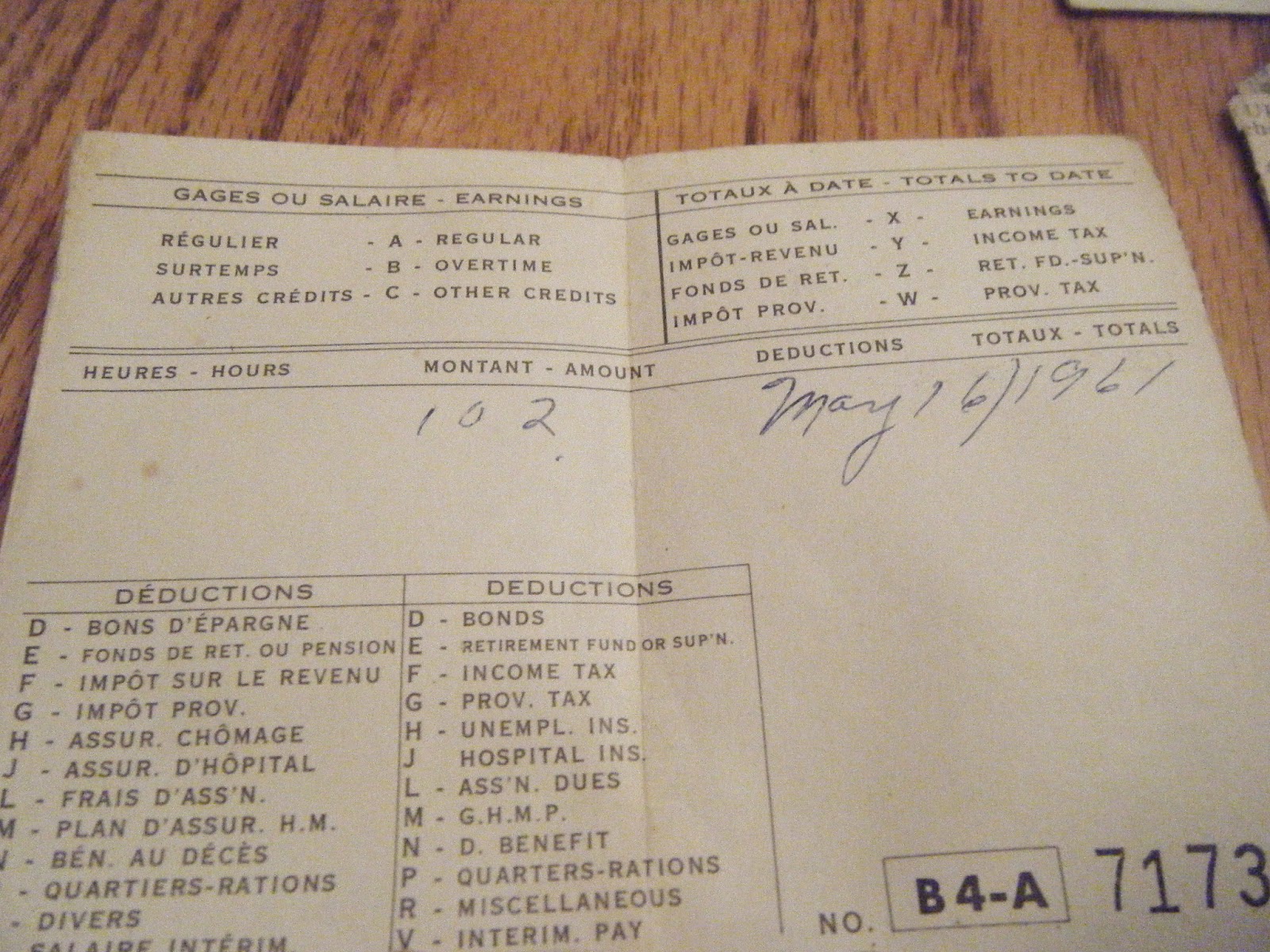
These letters were also in the wallet. From them, and the dates of various receipts, it looks like she carried it from 1958-1974. Mom and I haven't gotten to translating them yet from the original French.

There were two of these, and we aren't sure how she came by them, since as far as we know she never left the Great Lakes/Niagra region of North America. They are raffle tickets sponsored by an Irish hospital, and direct the bearer to listen to a Dublin radio station to see if they are a winner.

While Mom pieces together the faces and names from the photographs, I've put myself in charge of the wallet. It's fascinating seeing these little bits of history, pieces of my grandmother's life long before I was born. Seeing where she went, who she was in contact with. There were at least a dozen business cards, including one from the Canadian Consulate in Detroit. Tucked into a pocket were two keys, presumably to one of the many appartments she lived in over the years. At least four different addresses are represented on various pieces of paperwork--a HydroQuebec electric bill, a Western Union wire transfer. Scraps of paper with notes on them, a slew of receipts. Some of her notes are in English, most are in French. There's even a help wanted ad tucked away for a job she might have been considering at some point.
I leave you with this, which sums up my grandmother's pride pretty well. She was always very proud, both of her own heratige, and of the American side that my mother inherited through her father. This was folded up among the other detrious:

It is an article about a Canadian woman, age 34, who turned down a ladyship (is that the right word?) in the UK because she was so proud to be Canadian that she didn't want a British title. I'm still trying to translate the article and find out more about the story to see why she was being honored in the first place.
Tuesday, May 14, 2013
The Box, Part I
Have you ever seen those shows on PBS, or sometimes TLC or DIY or somesuch, where people research random old stuff they'd found? Glass bottles in the attic that belonged to a doctor who once owned the house, or a civil war rifle that belonged to a distant relative?
I love those shows. And I kind of feel like I'm in one.
A while back, we got a box from my uncle up in Canada, my mom's brother. I'd only seen this box once before, but as soon as the packaging came off, I knew what it was.
This old wooden box was found among my grandmother's things after she died. It's full of old black and white photos of people who died long before I was born, and in most cases, before my mom was born. At any rate, we only know who a handful of the people in the pictures are. They range from the funny:

to the sweet:

to the slightly creepy:

and hit everywhere in between.
This guy shows up quite a lot. Doesn't he look like he's about to whip out a Tommy gun and go looking for Capone? We don't know who he is, but I suspect his pictures are some of the oldest in the collection.

 This is one of the few people we could put a name to: Ettiene Cabinaugh. I don't know much about him other than he was in the RAAF in WWI, and was shot down over France. We have a certificate and a letter from the RAAF commemorating his death, and a letter from one of his fellow soldiers that reads like a short eulogy, talking about his personality and the fact that his sister and mother would send him bottles of wine by baking it into loaves of bread. After his death, a ring was found in his possessions, intended as an engagement ring for his girlfriend. It was passed on to an aunt and eventually to my mom. It appears to be cut glass, but it's still pretty.
My mom and I are going through family records, trying to piece together who is who and when some of the photos were taken. From the dates, we know that they range between 1937, mostly up through the early 60's, with a few from the 70's and 80's.
This one is familiar. I think I've seen this park before. At a guess, I would say that it is somewhere in Montreal, I think off of St. Catherine, but I couldn't say for certain. Mom also thinks it is familiar, but thinks it might be in Windsor. Anyone else want to hazard a guess?

I love those shows. And I kind of feel like I'm in one.
A while back, we got a box from my uncle up in Canada, my mom's brother. I'd only seen this box once before, but as soon as the packaging came off, I knew what it was.
This old wooden box was found among my grandmother's things after she died. It's full of old black and white photos of people who died long before I was born, and in most cases, before my mom was born. At any rate, we only know who a handful of the people in the pictures are. They range from the funny:


to the slightly creepy:

and hit everywhere in between.
This guy shows up quite a lot. Doesn't he look like he's about to whip out a Tommy gun and go looking for Capone? We don't know who he is, but I suspect his pictures are some of the oldest in the collection.

 This is one of the few people we could put a name to: Ettiene Cabinaugh. I don't know much about him other than he was in the RAAF in WWI, and was shot down over France. We have a certificate and a letter from the RAAF commemorating his death, and a letter from one of his fellow soldiers that reads like a short eulogy, talking about his personality and the fact that his sister and mother would send him bottles of wine by baking it into loaves of bread. After his death, a ring was found in his possessions, intended as an engagement ring for his girlfriend. It was passed on to an aunt and eventually to my mom. It appears to be cut glass, but it's still pretty.
My mom and I are going through family records, trying to piece together who is who and when some of the photos were taken. From the dates, we know that they range between 1937, mostly up through the early 60's, with a few from the 70's and 80's.
This one is familiar. I think I've seen this park before. At a guess, I would say that it is somewhere in Montreal, I think off of St. Catherine, but I couldn't say for certain. Mom also thinks it is familiar, but thinks it might be in Windsor. Anyone else want to hazard a guess?

Monday, April 8, 2013
When Being Wrong is a Turn Off
So I might have mentioned that I got a huge stack of library books.
I've been working my way through them, returning some and checking out
some others. Yesterday I started a new book at work. It's from a series
that I was really looking forward to when it came out. I read the first
book last year, and I remembered that I had trouble getting into it, but
I couldn't remember why. Either way, I picked up the second book and
have started it.
Suddenly, I remember the problem.
I am not an authority on history. I know a lot about history, but even of the eras that I might be considered something of an expert on, the Victorian period is not on that list.
So when I find glaring historical inaccuracies in the first five chapters, it is a huge turn off. Things like someone tipping a bell boy what he probably would have made in two days. I remember a similar inaccuracy in the previous book. Gail Carriger explains it far better than I could.
The story is an alternative history; there are some changes that have been made to settings, technology, and the like for the sake of the story. That's fine. But there are a few things that are just. Plain. Wrong.
Just to be sure, I looked up a few things. The story was set in 1897. The average yearly pay in 1900 was $436. Since this is a really fancy hotel in New York we're talking about, I'll give them a benefit of a doubt and even though this is a kid between the ages of 12 and 15 that we're talking about, I'll assume that he's getting the average national pay, even though that average is based on adult, American men, who made the most at that time, and not a kid, likely an immigrant or the child of immigrants.
$436--that's a little over $8 a week (working 40-60 hours; adults worked 60 hour weeks, I'm not sure about kids and teens. Like I said, I'm no expert, I'm just running off of a quick google search and some prior knowledge), or about $1.20 a day.
Now, even if our character only tipped a dollar, that's still most of what he made in a day, and likely a lot more, considering all of the allowances I just made. This character hands out the cash without a second thought. Even if you took it as an act of generosity, it's still extremely unlikely.
Add to the fact that this character is British, and it becomes even more unlikely that he would be handing out paper money to faceless help. The book doesn't indicate that he has been outside of Britain before; the British used primarily coins until the 1920s. A penny would have been considered a good tip, on either side of the pond.
And that was just the first error I found.
I haven't decided yet if I'm going to finish this book. Right now I'm giving it three strikes. One more blatant mistake, and back to the library it goes.
If someone knows more about 1897 New York and would like to correct me, feel free to do so. I'd like to give the author the benefit of a doubt, but this is just driving me up a wall.
Suddenly, I remember the problem.
I am not an authority on history. I know a lot about history, but even of the eras that I might be considered something of an expert on, the Victorian period is not on that list.
So when I find glaring historical inaccuracies in the first five chapters, it is a huge turn off. Things like someone tipping a bell boy what he probably would have made in two days. I remember a similar inaccuracy in the previous book. Gail Carriger explains it far better than I could.
The story is an alternative history; there are some changes that have been made to settings, technology, and the like for the sake of the story. That's fine. But there are a few things that are just. Plain. Wrong.
Just to be sure, I looked up a few things. The story was set in 1897. The average yearly pay in 1900 was $436. Since this is a really fancy hotel in New York we're talking about, I'll give them a benefit of a doubt and even though this is a kid between the ages of 12 and 15 that we're talking about, I'll assume that he's getting the average national pay, even though that average is based on adult, American men, who made the most at that time, and not a kid, likely an immigrant or the child of immigrants.
$436--that's a little over $8 a week (working 40-60 hours; adults worked 60 hour weeks, I'm not sure about kids and teens. Like I said, I'm no expert, I'm just running off of a quick google search and some prior knowledge), or about $1.20 a day.
Now, even if our character only tipped a dollar, that's still most of what he made in a day, and likely a lot more, considering all of the allowances I just made. This character hands out the cash without a second thought. Even if you took it as an act of generosity, it's still extremely unlikely.
Add to the fact that this character is British, and it becomes even more unlikely that he would be handing out paper money to faceless help. The book doesn't indicate that he has been outside of Britain before; the British used primarily coins until the 1920s. A penny would have been considered a good tip, on either side of the pond.
And that was just the first error I found.
I haven't decided yet if I'm going to finish this book. Right now I'm giving it three strikes. One more blatant mistake, and back to the library it goes.
If someone knows more about 1897 New York and would like to correct me, feel free to do so. I'd like to give the author the benefit of a doubt, but this is just driving me up a wall.
Monday, March 25, 2013
20's Week Part I: Fashion
Inspired by one of the stories I'm working on, I declare this 20's Week!
Have I mentioned that I love the 1920s? I adore art deco, and the fashion--though I'm far too curvy to ever be able to pull it off. Flapper dresses make me look like I'm wearing a very glittery potato sack. It's a shame, since I love the aesthetic and did I mention? I have a bob now. My hair was down to the middle of my back, but I chopped it all off a few weeks ago. It's now more similar to my profile picture, minus the blue streaks (and even then, only because work would frown upon it. I miss my multicolored hair).
Here's a few (okay, more than a few) images I love of 1920s fashion:


I'll admit, I love the hats. I love a good cloche. I also have a fairly large collection of hats (not huge, mind you, but more than I can generally store). I want to get some command hooks and fill a blank section of all with a hat display. Just for the fun of it, you know. And because I'm more likely to wear them if I can see them.


 And here are a few modern takes. I might be able to pull off something like this first one:

 Look! Emo flappers:
 I bet they listen to blues. :)
Of course, one of my favorite 20s style inspirations is still Evelyn O'Connell from the Mummy movies, but more on that later. Check back on Wednesday for 20s/20s inspired film!
Have I mentioned that I love the 1920s? I adore art deco, and the fashion--though I'm far too curvy to ever be able to pull it off. Flapper dresses make me look like I'm wearing a very glittery potato sack. It's a shame, since I love the aesthetic and did I mention? I have a bob now. My hair was down to the middle of my back, but I chopped it all off a few weeks ago. It's now more similar to my profile picture, minus the blue streaks (and even then, only because work would frown upon it. I miss my multicolored hair).
Here's a few (okay, more than a few) images I love of 1920s fashion:
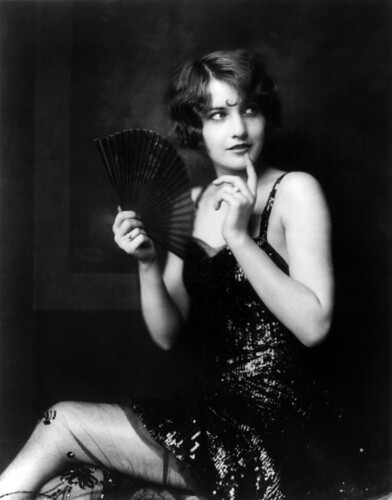


I'll admit, I love the hats. I love a good cloche. I also have a fairly large collection of hats (not huge, mind you, but more than I can generally store). I want to get some command hooks and fill a blank section of all with a hat display. Just for the fun of it, you know. And because I'm more likely to wear them if I can see them.



Of course, one of my favorite 20s style inspirations is still Evelyn O'Connell from the Mummy movies, but more on that later. Check back on Wednesday for 20s/20s inspired film!
Wednesday, March 6, 2013
Buried in Books (and That's the Way I Like It)
I know I said I was scaling back on the writing, but clearly cutting out books is not my intention. This is my upcoming reading list. And that's not even including The Lord of the Rings that's currently sitting by my bed:

Clearly I have enough there to give you at least a book review a week for the next couple of months. Not all of them are books for review; Virals is a Kathy Reichs book that I bought when she was in Beavercreek last year for a signing, and never got around to reading. The books on the 1920s are research for novels that I most certainly am not writing at the moment (I never made any rules about outlining, did I? Or doing character studies, right?), and Pawn of Prophecy is the latest book that Missouri has foisted on me and insisted that I read.
Not shown--a book one of my cousins gave me last summer at our family reunion. I like what I've read by that author previously, but am having trouble getting into Laddie. It's on hold until I finish other things.
At the time of this writing, Missouri is borrowing Mountain Echos by C.E. Murphy; it arrived this morning and since I hijacked her new Karen Chance novel when it arrived, it only seems fair that she get first crack at one of my new books (I can hardly be blamed, really. Fury's Kiss sat unattended in the living room for three whole days and she made no move to read it. A book that good shouldn't be left to gather dust, and once again, Karen Chance did not disappoint).
Now, if you'll excuse me, I have some reading to do.

Clearly I have enough there to give you at least a book review a week for the next couple of months. Not all of them are books for review; Virals is a Kathy Reichs book that I bought when she was in Beavercreek last year for a signing, and never got around to reading. The books on the 1920s are research for novels that I most certainly am not writing at the moment (I never made any rules about outlining, did I? Or doing character studies, right?), and Pawn of Prophecy is the latest book that Missouri has foisted on me and insisted that I read.
Not shown--a book one of my cousins gave me last summer at our family reunion. I like what I've read by that author previously, but am having trouble getting into Laddie. It's on hold until I finish other things.
At the time of this writing, Missouri is borrowing Mountain Echos by C.E. Murphy; it arrived this morning and since I hijacked her new Karen Chance novel when it arrived, it only seems fair that she get first crack at one of my new books (I can hardly be blamed, really. Fury's Kiss sat unattended in the living room for three whole days and she made no move to read it. A book that good shouldn't be left to gather dust, and once again, Karen Chance did not disappoint).
Now, if you'll excuse me, I have some reading to do.
Monday, March 4, 2013
Book Review: Sew Retro
Sew Retro: A Stylish History of the Sewing Revolution by Judi Ketteler
 I picked this book up at the library this week, along with a stack of other sewing/craft books that I'd like to review for you. I was actually looking for books of fashion history/victorian fashion plates for a costume I'm planning when I found this one. I almost passed it up, until I started flipping through it and noticed that it wasn't just patterns, it was history, too.
Sew Retro combines a crafty how-to with a history of sewing unlike anything I've read. We begin with the invention of the sewing machine in the mid-1800s, including interesting facts like Issac Singer, who revolutionized the textile community, wasn't exactly known for great inventions--more like fast ways to turn a buck. Funny how something as enduring as the sewing machine was originally meant to be a "get rich quick" scheme for the inventor.
Ketteler takes the historical facts and blends them seamlessly with modern thought, exploring feminism and it's view of the past as well as the modern impetus for crafts, fashion, and sewing. She looks at both what historical women may have felt about their household chore, and how we today view our hobby.
Her prose is well written, and illustrated with hundreds of vintage images taken from advertising, pamphlets, and magazines. The book itself combines historical essays with timelines, profiles of historical figures in the sewing and fashion industry, as well as interviews with contemporary designers.
There are 25 patterns included in this book. The instructions are clear and concise, and a low skill level is required. A beginner could easily tackle every project in this book. However, I find that the designs themselves are somewhat unappealing, despite my love for vintage fashion. Most of them are for accessories or household items (lots of bags, aprons, and table linens), with only two actual garments in the entire book (both skirts). That being said, however, the historical information makes this book well worth it, and there might be some techniques used in the patterns that would be useful in other applications.
Rating: 3.5 out of 5 skeins
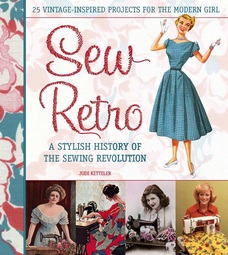
Sew Retro combines a crafty how-to with a history of sewing unlike anything I've read. We begin with the invention of the sewing machine in the mid-1800s, including interesting facts like Issac Singer, who revolutionized the textile community, wasn't exactly known for great inventions--more like fast ways to turn a buck. Funny how something as enduring as the sewing machine was originally meant to be a "get rich quick" scheme for the inventor.
Ketteler takes the historical facts and blends them seamlessly with modern thought, exploring feminism and it's view of the past as well as the modern impetus for crafts, fashion, and sewing. She looks at both what historical women may have felt about their household chore, and how we today view our hobby.
Her prose is well written, and illustrated with hundreds of vintage images taken from advertising, pamphlets, and magazines. The book itself combines historical essays with timelines, profiles of historical figures in the sewing and fashion industry, as well as interviews with contemporary designers.
There are 25 patterns included in this book. The instructions are clear and concise, and a low skill level is required. A beginner could easily tackle every project in this book. However, I find that the designs themselves are somewhat unappealing, despite my love for vintage fashion. Most of them are for accessories or household items (lots of bags, aprons, and table linens), with only two actual garments in the entire book (both skirts). That being said, however, the historical information makes this book well worth it, and there might be some techniques used in the patterns that would be useful in other applications.
Rating: 3.5 out of 5 skeins
Thursday, March 29, 2012
Costume p0rn and Typewriters VI
The Help
This is the last regular post I have planned in this series, though my next Netflix might get tagged on at the end and I'll probably revisit it from time to time, since by now you all know how much I love writing about costumes in general, and period costumes in particular.
I talked a bit about this movie when I first saw it in theaters, and the desire to watch it again is what kicked off this whole costume p0rn thing (with some help from Murdoch and Dr. Ogden). Unfortunately, though, I had to wait for Netflix to catch up, hence the other films and shows.
Before I get into the costumes, there are two other draws to this movie (other than cast, story, etc): number one, the sets are wonderful, particularly the mansion Skeeter's family lives in.
Case in point:


And then there's this:
 Her '62 Cadillac convertible is more than drool-worthy in my opinion. Put a bow on it, I'll take it!
Allison Janney (who plays Skeeter's mother), like most of the characters, is dressed to the nines in nearly every scene. She sports some fantastic jewelry, and I love her sweater clasps, which Google images is failing me on.
Of course, in a film of this sort we have the usual 1960s style:
 I love the nipped in waist lines and the full, swishy skirts. I also love that the center dress was "handmade" (at least, according to the story line) even if I don't like the woman who "made" it so much.
 I guess I'm not the only one who loves the costumes from this movie, since there was a display around the time of the premier. I love the apricot dress on the right, which Skeeter wears to dinner. I hate the romper on principal. Rompers should remain in the past where they belong, but every time we get a truck in at work I get proof that they refuse to die.
 This is possibly one of my favorite outfits. It's simple, business like, and very flattering (fun fact: there's one almost identical to it in the Nancy Drew movie, and Skeeter wears a similar outfit in green later in the movie. Must have been a popular style). I also adore the leather satchel that Skeeter carries all of her business papers in.
Miss Hilly might be the devil incarnate, but she does have great fashion sense, like the pink jacket and dress she wears to the association meeting.
Since this is a movie about writers, there are several typewriters that show up, though most of them are in passing and the bulk of them are available only in brief glimpses when Skeeter visits the Jackson Journal office.

I did pick up the book. We'll see if typewriters play a bigger role in the print format.
This is the last regular post I have planned in this series, though my next Netflix might get tagged on at the end and I'll probably revisit it from time to time, since by now you all know how much I love writing about costumes in general, and period costumes in particular.
I talked a bit about this movie when I first saw it in theaters, and the desire to watch it again is what kicked off this whole costume p0rn thing (with some help from Murdoch and Dr. Ogden). Unfortunately, though, I had to wait for Netflix to catch up, hence the other films and shows.
Before I get into the costumes, there are two other draws to this movie (other than cast, story, etc): number one, the sets are wonderful, particularly the mansion Skeeter's family lives in.
Case in point:
And then there's this:
 Her '62 Cadillac convertible is more than drool-worthy in my opinion. Put a bow on it, I'll take it!
Allison Janney (who plays Skeeter's mother), like most of the characters, is dressed to the nines in nearly every scene. She sports some fantastic jewelry, and I love her sweater clasps, which Google images is failing me on.
Of course, in a film of this sort we have the usual 1960s style:
 I love the nipped in waist lines and the full, swishy skirts. I also love that the center dress was "handmade" (at least, according to the story line) even if I don't like the woman who "made" it so much.
 I guess I'm not the only one who loves the costumes from this movie, since there was a display around the time of the premier. I love the apricot dress on the right, which Skeeter wears to dinner. I hate the romper on principal. Rompers should remain in the past where they belong, but every time we get a truck in at work I get proof that they refuse to die.
 This is possibly one of my favorite outfits. It's simple, business like, and very flattering (fun fact: there's one almost identical to it in the Nancy Drew movie, and Skeeter wears a similar outfit in green later in the movie. Must have been a popular style). I also adore the leather satchel that Skeeter carries all of her business papers in.
Miss Hilly might be the devil incarnate, but she does have great fashion sense, like the pink jacket and dress she wears to the association meeting.
Since this is a movie about writers, there are several typewriters that show up, though most of them are in passing and the bulk of them are available only in brief glimpses when Skeeter visits the Jackson Journal office.

I did pick up the book. We'll see if typewriters play a bigger role in the print format.
Wednesday, March 28, 2012
Costume p0rn and Typewriters V
The King's Speech
This is another movie I've spoken about on the blog, rather at length, so let me sum up: Great hats, elegant costumes (would there be anything else in a film about British Royalty?) and an Oliver (which seems to be eluding my image searches, along with some of the better dresses from the film).


Plus, Geoffry Rush, Helena Bonham Carter, and Colin Firth. What's not to love?
ETA: Please don't forget about the typewriter I'm trying to find a new home for. Pictures available on request.
This is another movie I've spoken about on the blog, rather at length, so let me sum up: Great hats, elegant costumes (would there be anything else in a film about British Royalty?) and an Oliver (which seems to be eluding my image searches, along with some of the better dresses from the film).


Plus, Geoffry Rush, Helena Bonham Carter, and Colin Firth. What's not to love?
ETA: Please don't forget about the typewriter I'm trying to find a new home for. Pictures available on request.
Saturday, March 24, 2012
Costume p0rn and Typewriters I
I love historical costumes. I'm interested in most eras, but I especially love the Victorian period up through the early 60s--and it just so happens that those years were a typewriter heyday. Over the next few posts, I'll explore some of the shows/movies that I've seen recently (or would like to see again) that bring them together.
The Murdoch Mysteries
This Canadian series recently wrapped up it's 6th (and as far as I can tell, final) season. Seasons 1-3 are out on DVD, with season 4 just released in the past week.
Set in Victorian Toronto (mid 1890s-early 1900s), the titular character of Detective William Murdoch is played by Yannick Basson, a scientifically minded member of the Toronto Constabulary. Pioneering the use of techniques such as UV fluorescence, tracing phone calls and recording conversations as well as the use of psychology to catch criminals and garner confessions, Murdoch is changing the landscape of the police force. To aid him in his endeavors is Constable George Crabtree (Jonny Harris) and the coroner, Dr. Julia Ogden (Helene Joy).
 I love the costumes in this series, especially the ones they choose for Dr. Ogden. She always looks extremely elegant, but always approachable. Another thing that I like--you frequently see her in the same costume or reusing costume pieces. Yes, I know it is a mark of budget constrictions, but it always bothers me in a tv series when every time a character pops up, they're wearing something different. I frequently find myself wondering, "Exactly how many coats does she have? Where does she keep all of those dresses?" I feel that by giving her a staple wardrobe for day-to-day use, it makes her character more realistic. [Historical Note: Dr. Ogden is based on the real-life Dr. Julia Byrne, who worked in Toronto around the same time period.]
The men's fashion isn't quite so stunning as the ladies, but this is generally the case. I will say, however, that I love all of the waistcoats and cravats. I love a man in a waistcoat.
For the most part, typewriters only get a passing glance in this series, but on several occasions (in later seasons; I don't think it even shows up until the second half of season 2) we do see Murdoch using an Oliver. A number 5, perhaps? Mostly only the arched typebars are visible, not enough for me and my piddly knowledge of the machines to be able to identify it.
If you love history, you will adore this series. Episodic characters include Tessla, H.G. Wells, and Sir Arthur Conan Doyle. It's a must watch.
The Murdoch Mysteries
This Canadian series recently wrapped up it's 6th (and as far as I can tell, final) season. Seasons 1-3 are out on DVD, with season 4 just released in the past week.
Set in Victorian Toronto (mid 1890s-early 1900s), the titular character of Detective William Murdoch is played by Yannick Basson, a scientifically minded member of the Toronto Constabulary. Pioneering the use of techniques such as UV fluorescence, tracing phone calls and recording conversations as well as the use of psychology to catch criminals and garner confessions, Murdoch is changing the landscape of the police force. To aid him in his endeavors is Constable George Crabtree (Jonny Harris) and the coroner, Dr. Julia Ogden (Helene Joy).
 I love the costumes in this series, especially the ones they choose for Dr. Ogden. She always looks extremely elegant, but always approachable. Another thing that I like--you frequently see her in the same costume or reusing costume pieces. Yes, I know it is a mark of budget constrictions, but it always bothers me in a tv series when every time a character pops up, they're wearing something different. I frequently find myself wondering, "Exactly how many coats does she have? Where does she keep all of those dresses?" I feel that by giving her a staple wardrobe for day-to-day use, it makes her character more realistic. [Historical Note: Dr. Ogden is based on the real-life Dr. Julia Byrne, who worked in Toronto around the same time period.]
The men's fashion isn't quite so stunning as the ladies, but this is generally the case. I will say, however, that I love all of the waistcoats and cravats. I love a man in a waistcoat.
For the most part, typewriters only get a passing glance in this series, but on several occasions (in later seasons; I don't think it even shows up until the second half of season 2) we do see Murdoch using an Oliver. A number 5, perhaps? Mostly only the arched typebars are visible, not enough for me and my piddly knowledge of the machines to be able to identify it.
If you love history, you will adore this series. Episodic characters include Tessla, H.G. Wells, and Sir Arthur Conan Doyle. It's a must watch.
Thursday, July 21, 2011
Mabel
Currently reading: Proven Guilty
In the DVD player: Iron Jawed Angels
I've been going through my extensive film library, trying to compile a list of movies and tv shows that include typewriters, and the makes and models where possible. Last night I got to watch one of my favorites: Iron Jawed Angels. For starters, the story is fabulous and made more so that it is based on the plight of real women leading the suffragist movement. Add to that a wonderful cast and some of my favorite film costumes of all time, and you've really got a winner.
One of my favorite character in the film has always been Brooke Smith's character, Mabel Vernon. When we are first introduced to her in the film, she says that she became friends with Alice Paul when they played hockey together at school (one of my favorite sports in gym class). Her costume usually involves a necktie, which I'm rather fond of on women, particularly when combined with Victorian era dresses. In the film, Mabel is the one people go to to find out what is going on, what the latest news is. She also seems to spend a good deal of her screen time battling with various pieces of office equipment, most notably the typewriter in her introduction scene.
The movie has another point of interest in that there are some really nice pieces of knitwear in it. (I choose to ignore the hideous, fringed, mustard yellow sweater Mabel dons at one point. We're all allowed to have an off day, fashion wise, and most of her friends were in prison at the time. Though come to think of it, that looks more like macrame or something than it does knitting.)
There are two typewriters that are featured in the film. The first is an Underwood that lives on Alice Paul's desk and is used to type all of her memos and editorials. It looks like a portable to me, but I can't seem to identify it (I'm still not good at identifying typewriters by sight. Sigh). The second is a Royal. It's also small enough that it looks like a portable, but it's hard for me to be sure.
I will be adding a page to the sidebar to list movies/television shows and the typewriters they contain at some point in the future (but not today). I want to make a similar list for typewriters in literature at some point as well.
In the DVD player: Iron Jawed Angels
I've been going through my extensive film library, trying to compile a list of movies and tv shows that include typewriters, and the makes and models where possible. Last night I got to watch one of my favorites: Iron Jawed Angels. For starters, the story is fabulous and made more so that it is based on the plight of real women leading the suffragist movement. Add to that a wonderful cast and some of my favorite film costumes of all time, and you've really got a winner.
One of my favorite character in the film has always been Brooke Smith's character, Mabel Vernon. When we are first introduced to her in the film, she says that she became friends with Alice Paul when they played hockey together at school (one of my favorite sports in gym class). Her costume usually involves a necktie, which I'm rather fond of on women, particularly when combined with Victorian era dresses. In the film, Mabel is the one people go to to find out what is going on, what the latest news is. She also seems to spend a good deal of her screen time battling with various pieces of office equipment, most notably the typewriter in her introduction scene.
The movie has another point of interest in that there are some really nice pieces of knitwear in it. (I choose to ignore the hideous, fringed, mustard yellow sweater Mabel dons at one point. We're all allowed to have an off day, fashion wise, and most of her friends were in prison at the time. Though come to think of it, that looks more like macrame or something than it does knitting.)
There are two typewriters that are featured in the film. The first is an Underwood that lives on Alice Paul's desk and is used to type all of her memos and editorials. It looks like a portable to me, but I can't seem to identify it (I'm still not good at identifying typewriters by sight. Sigh). The second is a Royal. It's also small enough that it looks like a portable, but it's hard for me to be sure.
I will be adding a page to the sidebar to list movies/television shows and the typewriters they contain at some point in the future (but not today). I want to make a similar list for typewriters in literature at some point as well.
Sunday, January 23, 2011
Shopping Mojo
Mom and I went to the Scott Antique Market at the Expo Center today, and I somehow managed to satisfy almost all of my nerdy habits--and I did it for less than $50!

On the right, you can see a cone of yarn--roughly 5-10 pounds (I'm awful at guessing weight, especially after I've carried it around all day and it feels more like 20) of cotton yarn, for $10. Perfect for dying!
On the left, right in front of Henry, you can see two comic books. Two issues of New Teen Titans. I haven't opened them up yet to check the date, but I think they're from some time in the '70s. One of them is about Starfire, and the other involves Raven going berserk. I picked them mostly because they centered around my two favorite characters. I was hoping for some NightWing action, but no such luck. Both of those together were $5.
 My favorite (and I think you can guess which it is and why) is the new/old typewriter in the middle! It's an Oliver #9 from 1912, and is in this great olive drab color (and I can't believe I just said that. Normally I hate anything that can be considered olive or drab, let alone both together). This machine is interesting because of how the text works. You can see in the photo below, the type actually comes down from the side, rather than up from the center. It was just so cool, I knew I had to make an offer. When the guy said he wanted twenty bucks for it, I jumped on it, no haggling. (He did give me $10 off the original price since it was the last day of the sale.) Another interesting thing is that every key has a either a letter or number, and a symbol on it. And judging by the look of the keys, this beauty has hardly been used in the last 98 years.
There is a lot of rust, however. One of the spool caps appears to be rusted in places, and the other is missing while the spool itself won't go back into it's proper place. The return on the carriage is very sticky, and platen is as hard as a rock. There was more dust on the thing when I picked it up than in most parts of the Sahara. I gave it a first cleaning tonight and found some lovely little surprises under the grime, but the rest will have to wait until tomorrow. For right now my goal is to de-gunk it and go over it with some steel wool, then it will likely hibernate on a shelf as a display item for a few weeks until it warms up and I can apply the rust remover to both it and Henry, someplace where the cat won't get tempted to take a lick when my back is turned (like the garage).
I really want to stay up and get more done, but it is getting late and I must be up early tomorrow for school. I don't even have time to make all of my notes about Oliver right now.

On the right, you can see a cone of yarn--roughly 5-10 pounds (I'm awful at guessing weight, especially after I've carried it around all day and it feels more like 20) of cotton yarn, for $10. Perfect for dying!
On the left, right in front of Henry, you can see two comic books. Two issues of New Teen Titans. I haven't opened them up yet to check the date, but I think they're from some time in the '70s. One of them is about Starfire, and the other involves Raven going berserk. I picked them mostly because they centered around my two favorite characters. I was hoping for some NightWing action, but no such luck. Both of those together were $5.
 My favorite (and I think you can guess which it is and why) is the new/old typewriter in the middle! It's an Oliver #9 from 1912, and is in this great olive drab color (and I can't believe I just said that. Normally I hate anything that can be considered olive or drab, let alone both together). This machine is interesting because of how the text works. You can see in the photo below, the type actually comes down from the side, rather than up from the center. It was just so cool, I knew I had to make an offer. When the guy said he wanted twenty bucks for it, I jumped on it, no haggling. (He did give me $10 off the original price since it was the last day of the sale.) Another interesting thing is that every key has a either a letter or number, and a symbol on it. And judging by the look of the keys, this beauty has hardly been used in the last 98 years.
 There is a lot of rust, however. One of the spool caps appears to be rusted in places, and the other is missing while the spool itself won't go back into it's proper place. The return on the carriage is very sticky, and platen is as hard as a rock. There was more dust on the thing when I picked it up than in most parts of the Sahara. I gave it a first cleaning tonight and found some lovely little surprises under the grime, but the rest will have to wait until tomorrow. For right now my goal is to de-gunk it and go over it with some steel wool, then it will likely hibernate on a shelf as a display item for a few weeks until it warms up and I can apply the rust remover to both it and Henry, someplace where the cat won't get tempted to take a lick when my back is turned (like the garage).
I really want to stay up and get more done, but it is getting late and I must be up early tomorrow for school. I don't even have time to make all of my notes about Oliver right now.
Wednesday, February 20, 2008
Blossoming

Well, it certainly took long enough, but here is a picture of my first ever batik! It's going to be a cushion, but I can't really stuff it until I get back to the US, just for the portability of flying.
This particular project had to be centered around Florence/Tuscany/Italy. What does this have to do with Florence, you may ask? Well, the Fleur de Lis at the center comes from the Loraines, a French family who married into the Medici, who where the rulers of Florence in the middle ages and Renaissance. The word Florence actually means something like "city of flowers" or "field of flowers;" I don't remember the exact translation. It felt like everyone in my class was doing some image of the Duomo, the huge church at the city center, and I wanted to be a bit different. I also just really like the Fleur de Lis; it's the Francophile in me.
Last night I made a huge leap--I cast on for my first ever sock! The yarn came from the dollar store, and it was finner than what I usually see there. It reminded me of the sock yarns back home, even though it wasn't quite the right weight. Well, I had a pair of size 2 DPNs in the apartment, and decided it was about time I started using them.
Even more shocking than the fact that I'm making a sock, I'm actually using a pattern! This will be a first for me. Well, there were the hideous fingerless gloves I made last spring, but I only finished one, and I hated every minute of it.
The pattern is the plain Widdershins, from the Knitty Summer '06 issue. I'm doing them in plain old stockinette right now, just to learn the construction, but I think I'm going to do the leg part in a k2p2 rib, and turn them into knee socks. I've been wanting a pair of socks that are a little heavier duty, because I keep wearing holes in all of the store bought ones I brought with me. I'm beginning to wonder if it's even worth my time to go back and sew them up again.
More news!
Alice and I have started recording our very first podcast! I should have it up on Itunes within the next week or so, with a link to appear here in the sidebar. I can't tell you the title yet; we were thinking about MisKnits, but that's a blog here on blogger. Then we decided on Pomcast (long story), but there's already a PomCast on Itunes.
Wednesday, January 30, 2008
Art History, Pass the Pizza, Dude
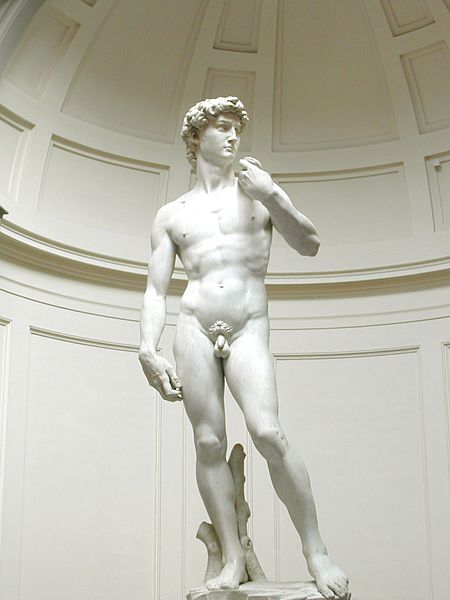
Right now in Art history, we are going over the Ninja Turtles: Leonardo and Michelangelo, how they were influence by Donatello, and later, how Raphael was influenced by the three of them. Today's lesson was about how Michelangelo's David got Splintered.
This famous statue has suffered decent amounts of man-inflicted damage; three times, in fact. The first was was when it was being transported from Mikey's workshop to Palazzo Vecchio. David has long been a symbol of the Republic and Florintine independence, which didn't go over so well with supporters of the Medici family, who ruled the city on and off for centuries. As they were moving the statue, a group of Medici supporters stoned the sculpture and the people carrying it.
More recently, sometime within the last 25 years, though I don't know exactly when, a crazy man rushed into the museum David was eventually moved to and began pounding away at his feet with a hammer, managing to break off several toes.
My favorite story is from the 1500's, when another Medici supporter got angry at those in power. He came out of meeting on the third floor of Palazzo Vecchio (City Hall), grabbed a bench from the hall, and hurled it out an open window at the statue, breaking off his raised arm and cracking it in two places.
David has, of course, been restored and repaired, and is looking pretty darn good for being over 500 years old.
_________
A little update on the Peace Project: We have a few new people signed up, and I've also added Scotland and England (as well as Whales, which as already been taken) to the list as separate countries. If you are from Ravelry, I'm hoping to get a group started on there by early next week--I've even got a banner already made. Two of them, actually. I could use some help spreading the word, though. I've posted about this project just about everywhere I can think of. If you know of anyone who might be interested, pass along the message and the link. If there's a website or other forum you think would be interested, please let me know so I can post there.
Cowabungah!!!
Subscribe to:
Posts (Atom)